Sting's Roguelite Deckbuilder Deserves More Attention
Japanese game studio Sting is one of those companies that far predates the term “Indie” but is now probably what many would consider to be an Indie Studio. The company was founded in 1989 and began life by creating games for the PC Engine and Super Nintendo. They've made all sorts of games, but are probably best known for RPGs, such as BAROQUE, Evolution: The World of Sacred Device, Yggdra Union, and Dokapon Kingdom.
Many of their releases remain exclusive to Japan and untranslated, but recently they've been making a push to put more of their games on Steam, having released 6 in 2025, most notably Dokapon! Sword of Fury and several Baroque spin-off titles (but, frustratingly, not Baroque itself). They also launched a brand new title in early access called Viractal: World of Viractalia, which was renamed to Viractal: Will You Trust Your Party? when it had it's 1.0 release a few months later in 2026. It's barely received any attention, at least on the English speaking internet, with the only English full page article review I can find unfortunately appearing to have been written by AI.
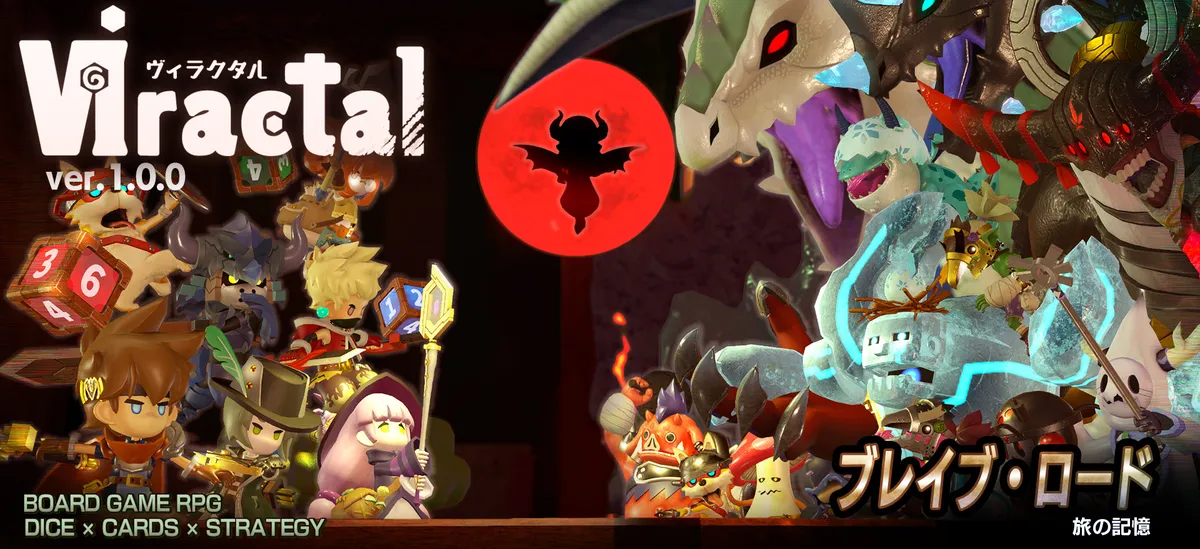 (image credit Sting)
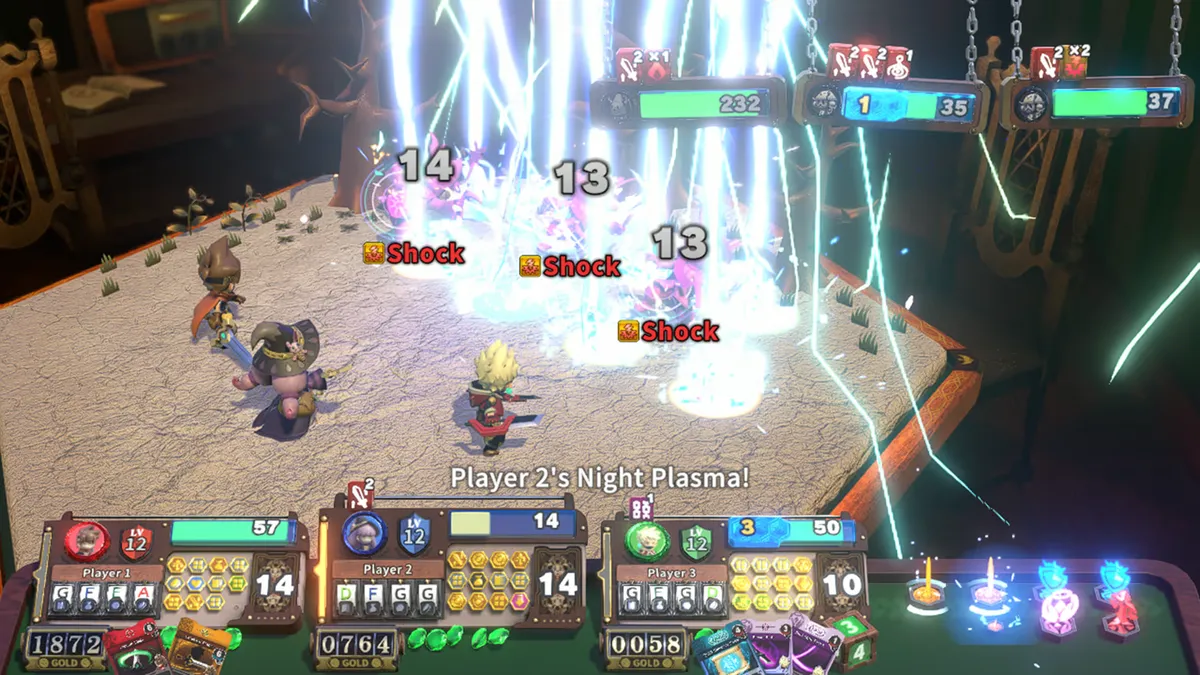
Going into the demo with little expectations, I was quite surprised to find that the game is a tightly designed RPG experience with combat inspired by the likes of Slay the Spire. You normally play with 3 characters (though you can play with less if you'd like) starting out with the Hero, Warrior, and Mage characters unlocked. Each character has a deck of cards with abilities they can use during combat, and in order to play powerful cards you need to have charged the appropriate amount of Will required (red "Justice", blue "Dignity", yellow "Wisdom" and pink "Mercy") which are charged when playing less powerful cards, or through various abilities/items.
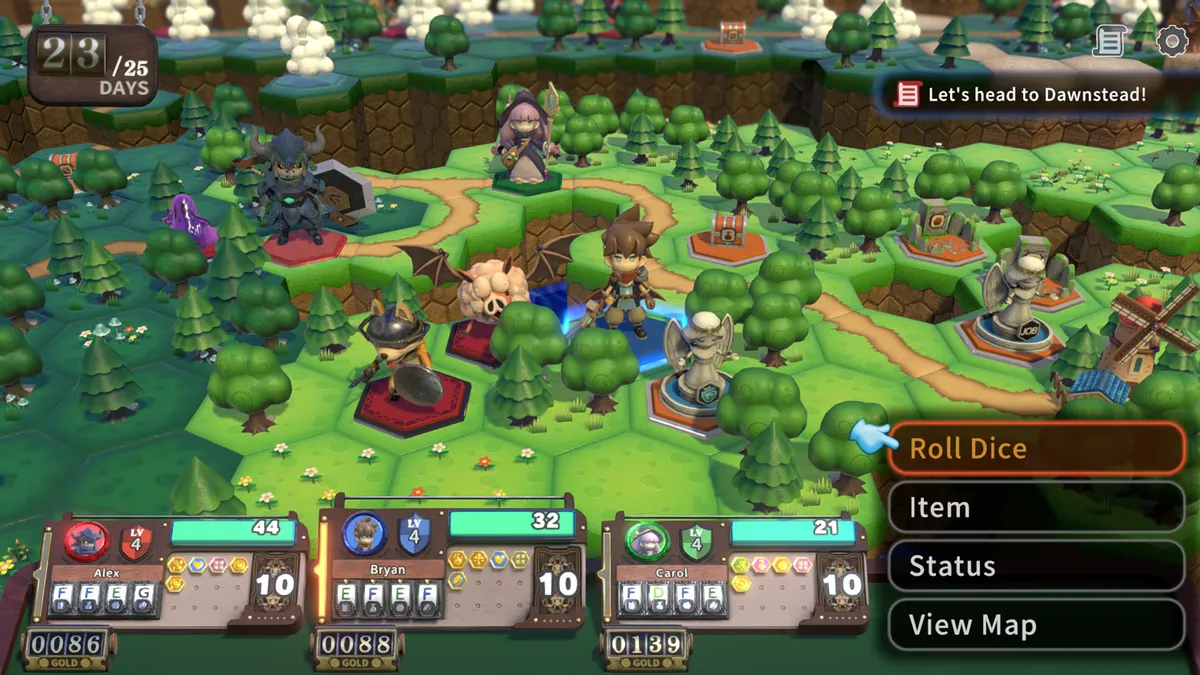
Gameplay takes place on a procedural generated hex-grid landscape, which you can travel around moving up to as many spaces as the number you rolled on your D6 each turn. On the map are monsters you can battle, treasure chests to collect, and statues and other various places that trigger events for gaining new cards, upgrades, abilities, et cetera. You are also given objectives, alongside random bonus objectives to earn Soul Points, each scenario has a "main quest" of sorts, but they're not strictly required for you to follow.
Overall, you're given a specific number of turns until the final boss, which you must then fight in order to complete the scenario. Going along with the main quest gives you stuff that helps you in the final encounter, but other than that there's nothing forcing you to do so, you can kinda just go wherever you'd like.
 (image credit Sting/Steam)
If you've been paying attention to the indie gaming scene, there was a pretty big explosion in "Roguelike/Roguelite Deckbuilder" games following the release of Slay the Spire in 2017 (at least, I think that was the origin of it, anyway), and... I mean, don't get me wrong, I like these sorts of games, but I feel like they have a serious problem of being too singularly focused on card battles to the detriment of everything else. Like, they can all be distilled down into a super simple gameplay loop: you battle cards, then you click on a map to select where you'd like to go next, and then you battle cards, and then you click on a map, and then you battle cards, and then you click on a map, and then you battle cards.
Yeah, I'm being deliberately mean here, there's stuff in between like going to shops or encountering special events, but once you play more than a few of these games, you get the sense that they're uninterested in thinking outside of the box (with rare exceptions like Inscryption). There's nothing wrong with these types of games, per say, even Balatro follows this formula strictly, with it's innovation instead focused on the fact that the card "battling" is making wacky poker hands to score points. And Balatro is awesome for that! but it's a little baffling to me how many of these games, from Vault of the Void, to Wild Frost, to Across the Obelisk, to even Slay the Spire 2 (at least how it seems based on the trailer) are content to just be "games where you click on a map to go to the next battle". It leads to a lot of them being forgettable once you find the one or two you really click with.
 (image credit Sting/Steam)
Enter Viractal. Viractal is, in abstract, almost identical in formula to these other games I've been talking about, you battle monsters using cards, you can go to shops and encounter unique events that may get you new cards or otherwise affect your abilities in some way, but the difference is that here the characters are pieces on a game board that have the agency to move wherever you want them to. It feels like a completely natural evolution of the concept, and it makes me both impressed that a little known Japanese studio like Sting is paying attention to games in the international Indie space and innovating on their concepts, and that there hasn't been more games that work like this one.
I haven't gone particularly in depth into Viractal's mechanics, the plot, or nitpicks I have with the game or anything like that, mostly because it's a new game that I think people ought to go check out for themselves (Try the demo if you're curious!). Overall, it's super fun, taking actions is fast and fluid with great sound design mimicking the clacking of board game pieces.
I do think the game's subtitle does it a bit of a disservice, when reading "Will You Trust Your Party?" it makes it seem as though betrayal is a core part of the experience, like in the Dokapon series that shares a similar board game RPG premise. The subtitle is likely inspired by the online multiplayer exclusive "Devil's Whisper" feature in which a demon can offer a player a contract to be rewarded in exchange for pranking or interfering with other players, but I've only played this game either solo or in local coop so I don't yet know what this feature looks like in practice.
However, from my experience, I think even if you were to throw in small pranks or goofs towards other players, this would not be the "relationship ruining" experience that Dokapon is often said to be, and if anything, it's a relationship building experience, as ultimately you all have to work together or die.
(Like my writing? Leave me a tip on Ko-Fi!)