Handsome Egg-Shaped Fellow Named Blupi
Part of the reason this blog exists is so I can infect the minds of my readers with knowledge of all the obscure video games I happened to play as a child, and today I want to tell you about a handsome yellow egg-shaped fellow named Blupi (pronounced Blue-Pea). To me and my siblings, Blupi was just as important and ubiquitous as Sonic the Hedgehog — after all, we had multiple games featuring him, most notably Speedy Blupi and Speedy Blupi II.
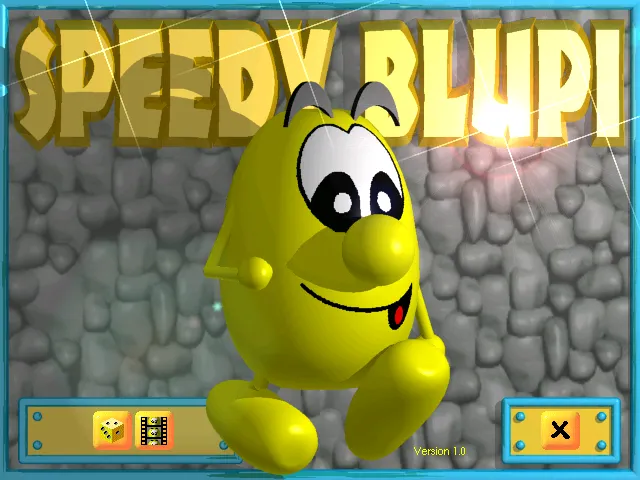
(What a delightful egg. Image credit The Cutting Room Floor)
Blupi is also sometimes known as Eggbert. I guess eGames, the US publishers of Speedy Blupi and Speedy Blupi II, were worried about kids in the United States not understanding what a Blupi was, so they renamed the games Speedy Eggbert and Speedy Eggbert 21. For simplicity's sake I'll refer to the character and game series as 'Blupi' from here on out.
Speedy Blupi is a simple platformer video game. Hopping into the single player mode, you’ll quickly get an idea of what it's all about; the main objective of each level is to find all the pieces of treasure hidden (or not so hidden) throughout and reach the goal while avoiding hazards. There’s not much Blupi can do by default as he has no moves other than the ability to duck or jump at three different heights, but there are a bunch of different items that offer new gameplay possibilities. Across different levels, Blupi can push blocks, hang from railings, hop on skateboards, ride in helicopters, drive tanks that shoot goo balls, swim through water, or lick special lollipops that make him jump extra high to reach new areas, among other things.
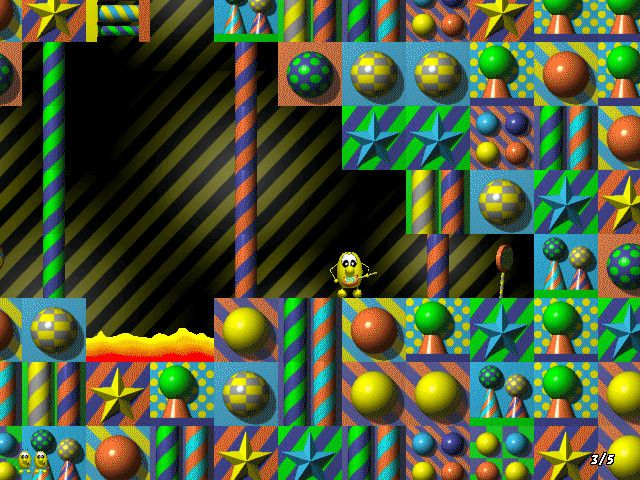
(Blupi licking a lollipop that gives him extra jump height. Image credit MobyGames)
There’s a lot of stuff to mess around with, and some things can have fun interactions. For example, when Blupi gets on a skateboard he becomes immune to explosions, allowing you to run over and harmlessly explode mines that would otherwise kill you. This probably wasn't meant to work that way originally, but it's clearly something that the developers considered to be fun as they use that trick plenty of times across the game's various levels.
Now, if you’re anything like I was as a kid (and I imagine most who played this would've been), you’ll either outright ignore or quickly get bored of the single player levels and turn your sights towards the level editor. Having now finally gone and played through all the levels in the original Speedy Blupi, they’re honestly all just fine. However, their cardinal sin is that they were designed by boring adults who were focusing purely on creating gameplay challenges above all else. See, as a child, I never made Blupi go through silly little levels where all you do is have him go through a stage, collect all the treasure, and reach the goal; instead I made Blupi go on adventures.

(The level editor in Speedy Blupi. Image credit MobyGames)
These adventures almost always started at Blupi’s house, with a simple grassy level. Blupi would then proceed to the right out of his house, where he would either find the entrance to an underground cave, or a massive metallic alien spaceship, or maybe a portal to the slime dimension. Nevermind that a lot of this stuff couldn't be literally put into the game, I just used my imagination to fill in the gaps. In the single player mode, the levels are not contiguous nor do they attempt to tell any sort of story, but almost all of the ones I created were. It seemed obvious, how could you not want to do that? Isn't that the point of games, to be creative and have fun and tell stories? I believe that to get the most out of Speedy Blupi, you have to look at it not just as a game but as a toy, which may be harder to do for adults.
Thinking back to the PC games I had access to as a child, a lot of them had level editors. Some examples that come to mind are The Incredible Machine, Stronghold, RollerCoaster Tycoon, Worms Armageddon as well as two other Blupi games: Planet Blupi and Blupimania. It's kind of a shame that this has become a lot less ubiquitous as PC and console gaming becomes more homogenized. Level editors for games that are easy and intuitive enough for children to understand aren’t the most common thing in the world, so I think the Speedy Blupi games are still a great thing to give to young kids who may be interested in gaming.
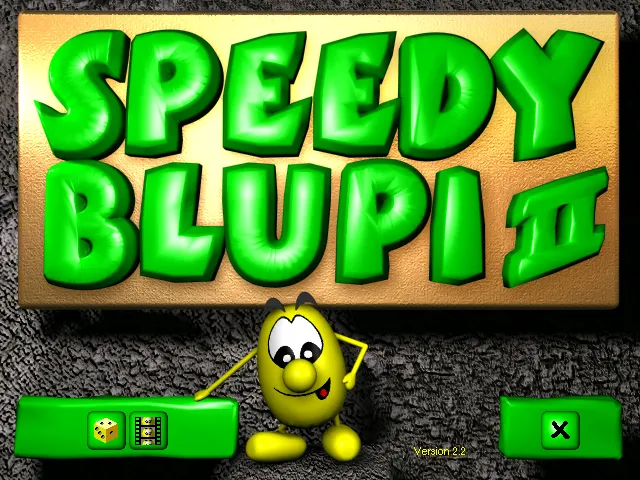
(Speedy Blupi II is fundamentally the same game as Speedy Blupi, but it contains additional content and a new set of single player levels. Its menu is themed around slime, one of the new terrain types available in the game. Image credit The Cutting Room Floor)
Speedy Blupi and its sequel are currently available as freeware you can download from blupi.org. Though, personally, I have to recommend this fan-made package “Speedy Eggbert 1 & 2 for Modern Windows” available on the Internet Archive. It’s already fully set up to play nice on Windows 10/112 and won’t hassle you as to whether or not you have the non-existent CD that it thinks you should have in order to be playing (the eGames versions never required you to use the CD after first install). You will be stuck with the perhaps heretical "Eggbert" naming, but it's worth it to have these hassle free.
The other Blupi games are also free to download on blupi.org, in fact, Blupimania and Planet Blupi have even been officially open sourced and updated to work on modern PCs. Unfortunately, Speedy Blupi hasn't yet received the same treatment, but this is due to these updates being solo projects by developer Mathieu Schroeter:
I hear the disappointment of Speedy Blupi fans, and I understand it. There will certainly be a new life for Speedy Blupi. But remember that everything I do for these games is on my own and without help (whether in time or financially) from Epsitec.
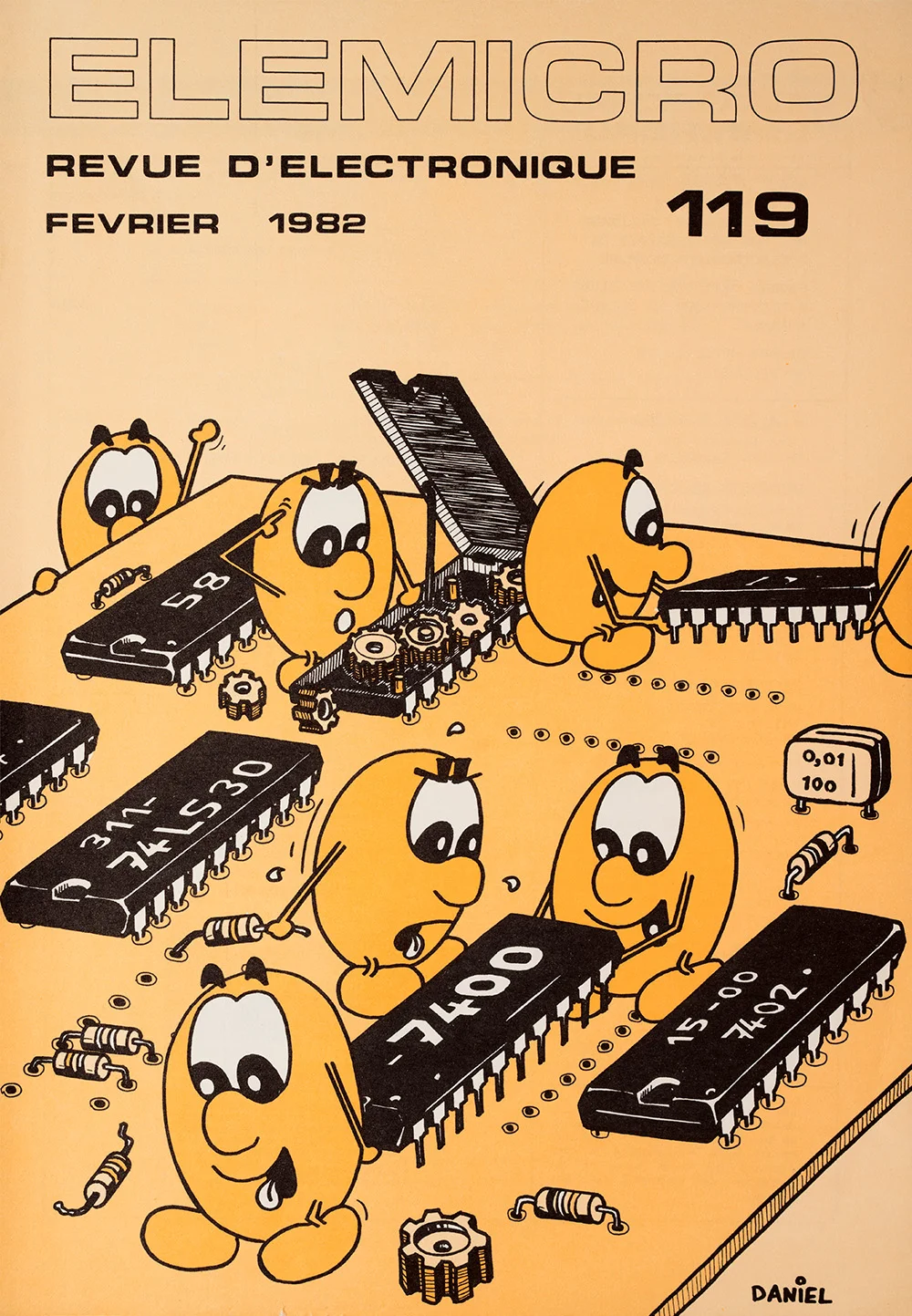 (ELEMICRO 119. Image credit smaky.ch)
Blupi has a pretty fascinating history as a video game mascot. He was originally created by Swiss artist and programmer Daniel Roux in the comic strip "La guerre des blup" (The War of the Blups)3 which he drew at the age of 16. "Blup" later appeared under the name "Toto" as a sort of mascot for the Smaky line of 8-bit PCs when Roux illustrated him for the covers and pages of ELEMICRO magazine. Having programmed several simple games beforehand, Roux would go on to create several games for the Smaky starring Toto that were aimed towards young children, beginning in 1988 with Toto à la maison (later ported to DOS and then remade on Windows under the title Blupi at Home).
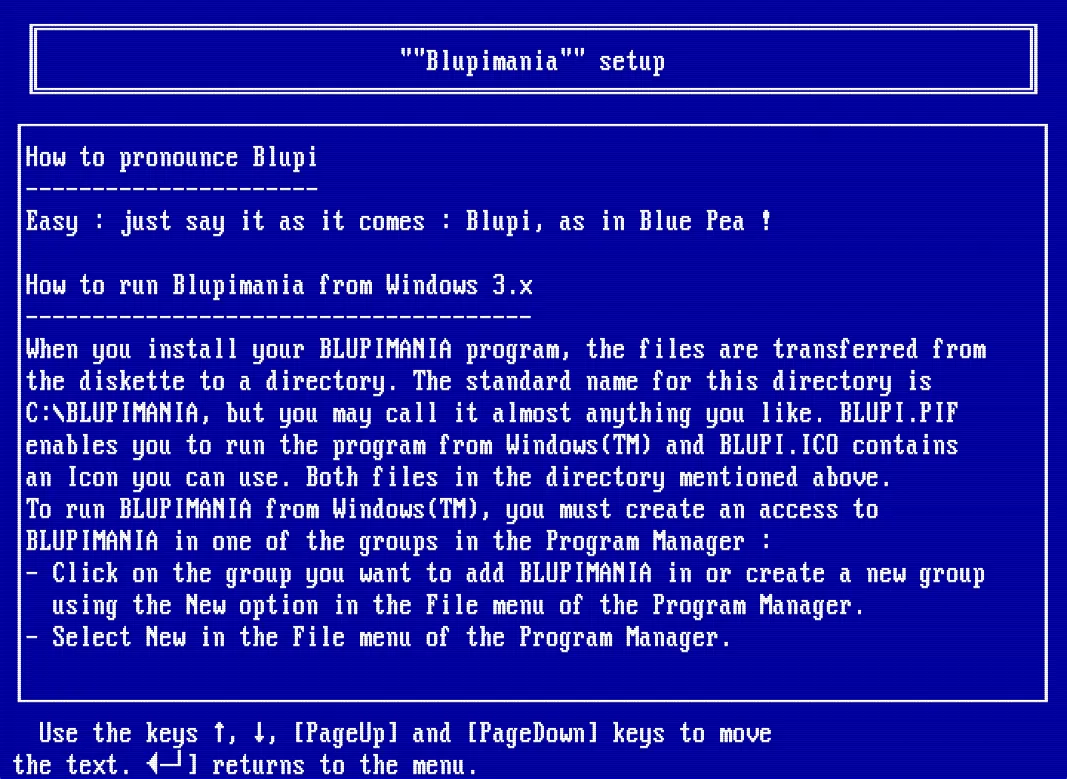
Several other Toto games of a similar vein4 were released in the following years before the target demographic of the games shifted from young children to people of all ages, starting with the sidescroller Toto explorateur (Blupi Explorer) in 1993, which had many ideas that would later be reused in Speedy Blupi. The next year saw the release of the puzzle game Blupimania, which finally cemented the mascot's name as Blupi (at least until eGames published Speedy Eggbert).
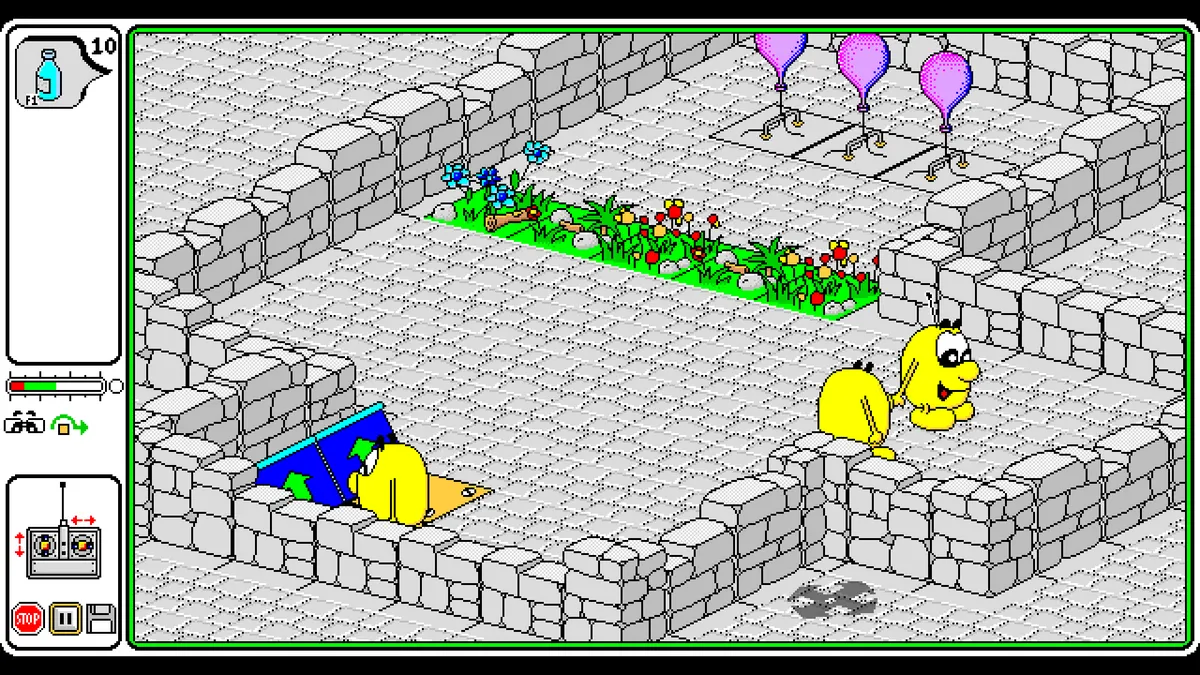 (Blupimania's 2023 open source port to modern systems)
In 1997, Blupi found a new home on Windows PCs with the release of Planet Blupi, a real time strategy game reminiscent of other RTS games that were popular at the time such as Age of Empires. In 1998, Speedy Blupi would come onto the scene, and would go on to become the most popular and widely recognized of the Blupi games. It was the first game in the series to spawn a direct sequel, with Speedy Blupi II arriving in 2001.
Then, the seemingly final Blupi game, Blupimania II, released in 2003. It would be the first and only Blupi game to be fully 3D, and it is also my personal least favorite out of all the games in the series I've played. Not long after publishing it, EPISITEC, the developer and publisher behind the series, moved away from the video games business altogether. The company is still around today, with their current flagship products being a software suite for Swiss legislators and a software suite for dental professionals.
Blupi's story would not end there, however. 2017 saw the open source revival of Planet Blupi alongside the creation of blupi.org as a free repository for EPSITEC's games. 2023 saw the open source revival of Blupimania and 2024 had Daniel Roux returning with a new tower defense game aptly titled Blupi is Back. Just last year in 2025, an enthusiast under the username "initmaster" released Blupi's Adventures, an officially licensed compilation of Blupi Explorer and Blupi's Travels, remade for the Game Boy Color.
Somehow, in 2026, Blupi is still alive and well. Seeing all the love this series has gotten after its untimely demise in 2003 has given me hope that no matter how obscure a video game or video game series ever seems, there's always going to be people who care about it enough to bring it forward. I have faith that a modernized version of Speedy Blupi5 will come out sooner or later; I mean heck, just a few months ago, another old European PC platformer, Moon Child, got its very own updated port after the game's scrapped theme song blew up and became a meme. If the source code is still out there, it's only a matter of time.
(Like my writing? Leave me a tip on Ko-Fi!)
Somehow, me and my siblings were pretty much always aware that Eggbert was just another name for Blupi. The "Eggbert" title was only used for the US releases of the Speedy Blupi games (as far as I can find, anyway), and we had copies of Planet Blupi and Blupi at Home, as well as a demo for Blupimania. We also for some reason had both Speedy Eggbert 2 and Speedy Blupi II.↩
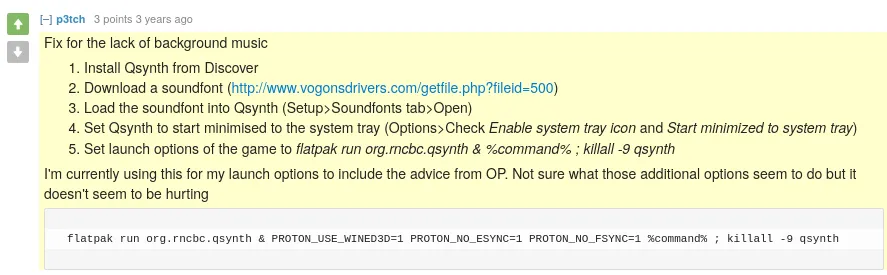
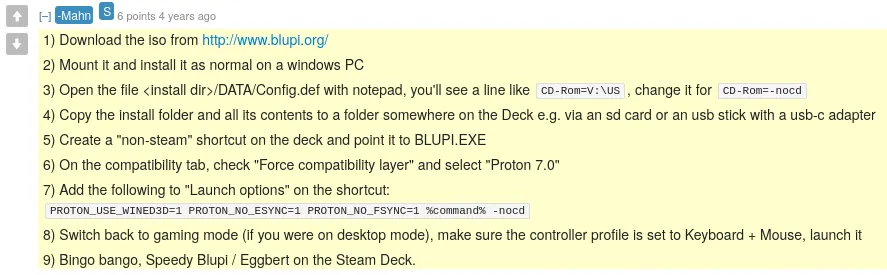
Getting the Speedy games running on Linux is slightly more complicated, as the MIDI music will not play properly out the box. This comment on Reddit contains instructions for how to get that working. You can use the Internet Archive version I linked or any of the versions from blupi.org, as running it in WINE/Proton makes it easy to force the game to not ask you for the CD (follow steps 3 and 7 of this comment). In case those comments get deleted I have screenshots of them here and here.↩
It should be noted that Blupi is not and never has been a singular character but a species of egg shaped creatures, so as a mascot he more akin to Yoshi or Toad rather than Mario (one of my siblings likened them to Smurfs). Even in Speedy Blupi, other differently colored Blupis may appear as enemies, or as player characters in the multiplayer LAN mode.↩
These games are Toto à la campagne (Toto in the Countryside), Toto s'amuse (Fun with Blupi), Toto se promène (Blupi's Travels), and Toto apprend le vocabulaire (Toto Learns Vocabulary). None of these were ever localized into English (with the exception of Blupi's Travels as touched upon in the article) and finding information about them is difficult. Fun with Blupi was apparently remade for Windows in 2000, hence why it has a Blupi title, but that version still remains exclusively French.↩
Oh yeah apparently Speedy Blupi II had a Windows Phone release in 2013. At this point I definitely do not think that counts as a meaningful modern port.↩