Quest 64 Review - All You Have To Worry About Is Brian
Quest 64 (also known as Holy Magic Century in Europe, or Eltale Monsters in Japan) has largely gone down in infamy, due to its’ status as the first, and one of only a select handful of RPGs on the Nintendo 64. Comparing this game to any of a dozen blockbuster RPGs also available on Playstation (or even Ocarina of Time or Paper Mario), you can easily see why this game got laughed at at the time. However, it has been seeing a bit of a critical re-evaluation lately, thanks in large part to the aloof, unblinking stare of the main protagonist Brian being memed into celebrity status by Quest64Official. Stripping it of its context and approaching it on its own terms, I think the game can offer a surprisingly refreshing and unique experience.
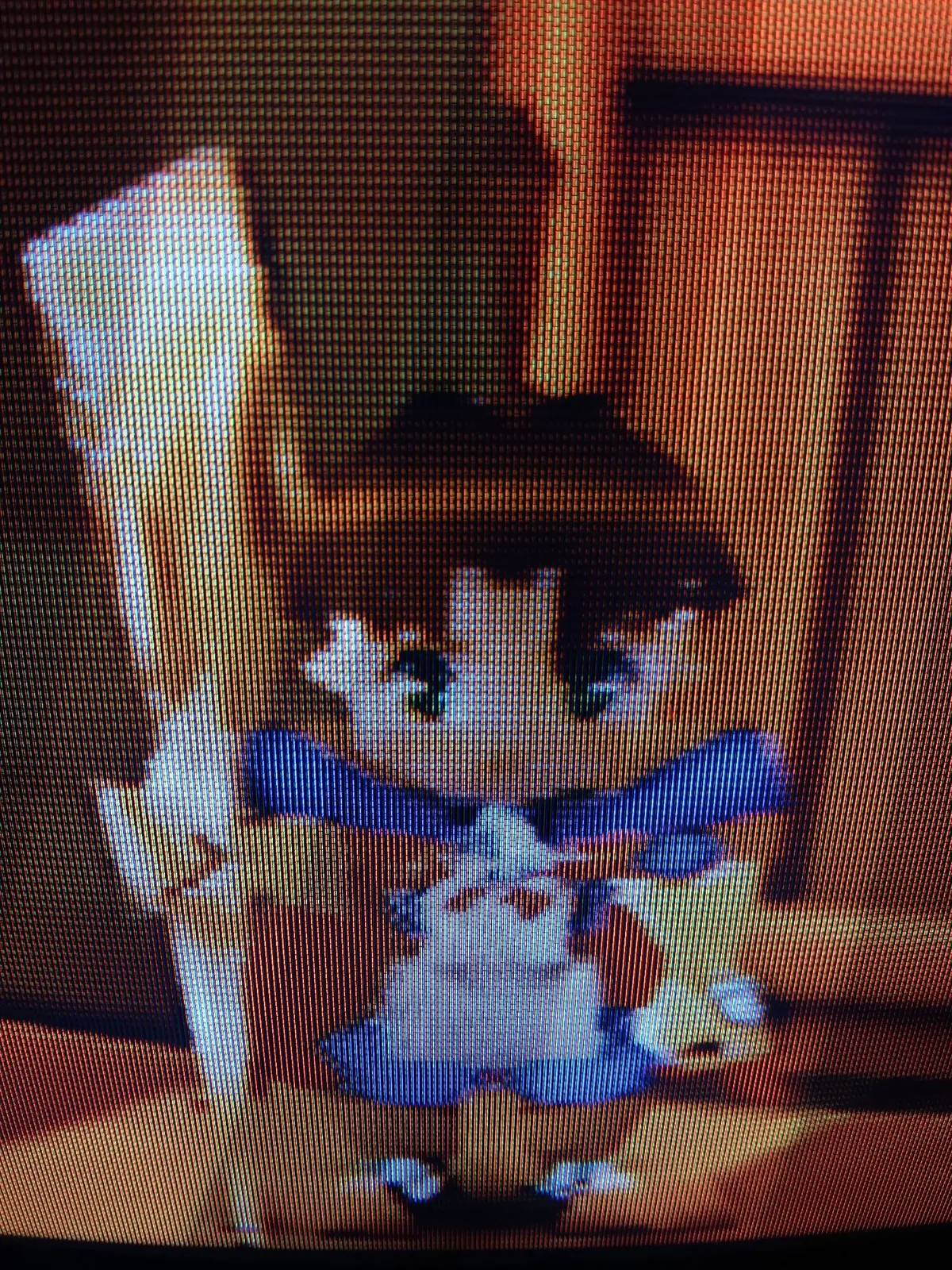 (Photograph of my CRT running Quest 64 that I posted on BlueSky)
I particularly find myself appreciating how “pure” of an RPG experience this game is. One of my least favorite things about older RPGs is having a party member fall in combat and become unable to earn EXP until revived. If you don’t sprint back to the nearest town to revive them, running from every combat encounter along the way, it can quickly become a destructive cycle where one or a few party members become far over-leveled while the weaker party members continue to keep getting knocked out. Here in Quest 64 however, there is only Brian. All you ever have to worry about is Brian, and how he’s doing.
There is also no money to worry about either, or equipment upgrades. Townspeople simply give you items because they know you’re on a quest and you’ll need them (though only once per type of item, they won’t give you more if you’re already carrying one), and you get to stay at Inns completely free of charge. Unfortunately this doesn’t mean the world of Holy Magic Century is a communist utopia, as one NPC references how the game’s events are hurting his pottery business. Also, y'know, the kingdoms and monarchs. Anyway, the way items are distributed leads to the player having a different relationship with them, the only way to “stock up” is to find items in chests, or occasionally from random monster drops (which aren’t common). You have to be smart and consider what you actually need to use, which is a real win for the “I can’t use this potion now, I might need it later!” crowd.
Once you gain access to the healing spell (level up Water, you'll need it), you pretty much only want to use items during boss battles, considering you regenerate MP by walking around in the overworld. Falling in combat is something game doesn't really punish, as it just puts you back at the last Inn you stayed at with 1 HP, which you can subsequently stay at for free to recover your health. There is a mechanic where time passes as you are adventuring out on the field or whenever you rest at an inn, and the amount of days you've spent on your Quest is recorded on the save screen, but it doesn't seem to affect anything, unless you're trying to do a challenge run where you beat the game in as few in-game days as possible or something.
This is going to sound a bit weird, but playing Quest 64 kinda reminds me of Tetris. Bear with me a moment, during a lot of the game there will be long sections where you’re going through a pretty linear cave or dungeon with the only thing breaking up the march to the end is random battles. Battles take place in 3D space, and different spells have different areas of effect. The Fireball spell will target enemies within a certain range of you, the Waterfall spell covers a small area, The Rock spell hurls a rock in a specific direction, stuff like that. In addition to considering what elements enemies are weak to, there’s a lot of spatial reasoning that goes into battles as well. It’s… not really like Tetris, but imagine if Tetris was turn based and you had a selection of different blocks to pick from each turn, and you vaguely get the idea. It’s weirdly relaxing. I mean, it can be boring too, sure, the music can get repetitive, but here in 2026 you might as well just grab your headphones and throw on a podcast or an album to start dissociating to as you carefully position Brian to try to nail four baddies with a single rock throw.
Story and lore-wise, the game has a very “Baby’s First RPG” feel to it. The game's setting is called "Celtland", which is a generic fantasy land through and through. The narrative begins with Brian setting out on a journey, or “Quest” if you will, to find his dad who went missing. Your dad was on his own Quest trying to recover the stolen Eltale (Eletale?) book, which is dangerous and has the ability to summon monsters into the world, or something. It seems like there are monsters, so I reckon that didn’t go very well. Bosses are usually just Some Guy who’s been doing bad things that you’ve heard every NPC in the nearby town complain to you about. It’s pretty funny how single minded particularly the first town (after the starter town) you come across is in this regard, constantly talking about how there is a Robber who is stealing from everyone in the town. They're really worried about the Robber. I hope that the Robber doesn't come and steal all my valuables.
I’d consider saying this would be a great first RPG for children, but the game can get surprisingly difficult. It’s not an RPG where you can breeze through without grinding, at least not on a first playthrough, and there's quite a bit of intricacies to how you level up. Every so often after a battle the game will prompt you to level up an element (Water, Earth, Wind, or Fire) of your choosing, potentially granting you additional spells. You can also find spirits hiding in the overworld which do the same thing. However for your other stats, you gain EXP for specific actions, like walking or dodging enemy attacks increases your Agility, taking hits or hitting enemies with your staff increases HP, for some examples. I recommend opening a GameFAQs guide and getting all that information in your head to keep in mind for your playthrough. It probably isn't the worst first RPG in the world, but I reckon a lot of people get skillchecked at the first boss if you don't know how to level up some of your stats, which is what happened to me and lead me to look up a guide to begin with.
By far the worst aspect of the game is how disorienting navigating the 3D world can get without a minimap. The 3D camera loosely follows behind Brian in a way that's not particularly helpful, and since the C buttons are used for casting spells, the only way to control the camera is to press B to center it behind Brian. You can hold B down to have the camera follow him closely which you’ll probably want to do a lot. When a random battle starts, it takes place within the overworld, so wherever Brian moves within the battle ring is where he’ll wind up once the battle is over. To the game’s credit, when you win a random encounter, Brian immediately jumps and faces the direction he had been facing prior to the start of a battle, but this can still be a bit confusing if he wound up on the other end of the battlefield from where he started. In order to escape from a battle, Brian must physically leave the battle ring, and in that case it’s up to you to remember what direction you were facing. Environments are often samey and contain few distinct landmarks, and random encounters tend to be absurdly frequent, making it pretty easy to get turned around. There is a compass in the corner of the screen, which you'll have to actively train yourself to be looking at at all times, it doesn’t exactly help to look at it after you realize you’ve gotten lost if you don't know what cardinal direction you had been travelling before anyway.
I don't want to spoil much more of the story, because there really isn't a lot to it to begin with, but I want to talk a bit about the final part of the game. I'll try to avoid specifics, but skip ahead to the next paragraph if you want to remain 100% spoiler free. The final part of the game ends up being pretty anticlimactic, which you'll kinda come to expect that over the course of the game. Naturally, you'll discover that the big bad is some fiery demon lord kinda guy, and you have to fight him. A good final boss in any game should test your knowledge of the skills you learned in the game, as well as your ability to think on your feet. Here, you'll quickly figure out the optimal strategy is to spam a single spell over and over and use up all the items you've been saving. I can't really say that the rest of the game hadn't prepared me for this encounter, but, it left a bit to be desired. After that, you'll finally get to see the most interesting thing in the story, as you talk to a character who was clearly at one point meant to be a party member before the developers scrapped that mechanic, as she reveals her backstory to you. Did she really help you along your Quest enough to earn this backstory spiel? Not really, but it's the thought that counts.

(gif credit The Simpsons/Tenor)
So, all in all, is Quest 64 really a hidden gem? It’s a decently competent RPG, it’s not particularly mind blowing in any way but it has some interesting ideas that help it feel fresh in the modern day. The graphics are vibrant and appealing for N64 (I will admit to finding many of the random NPC women quite pretty), the combat is decently fun if you don’t get bored of it, and though the story is nothing to write home about, it’s somewhat charming in its simplicity. The camera issues can be troublesome, but ultimately it was something I got (mostly) used to. I can see how it could prevent someone from enjoying the game however, hopefully that’ll get fixed in the PC recomp port that is being developed right now. I’m not really interested in giving games a review score so in lieu of that I give it a soft recommendation. Despite it's flaws it's a game that Works for me, and I think you should give it a shot if you like RPGs. At the very least, it should be examined because I think newer games could take some of the ideas it presents, like Elemental spell trees, and build upon them.
(Like my writing? Leave me a tip on Ko-Fi!)