Mina the Hollower Has An Identity Crisis
(This article does not contain major spoilers for Mina the Hollower)
Coming from the developers of Shovel Knight, one of the best known indie games, Mina the Hollower debuted on May 29th, 2026 to glowing reviews, claiming the status of the highest rated game of the year so far. If you've played Link's Awakening, Oracle of Seasons and/or Oracle of Ages from the Legend of Zelda series, you'll immediately recognize what kind of game Mina the Hollower is, as the artstyle is an obvious homage to those games. That, in of itself, was pretty much enough to sell me on this game, considering the Game Boy Color version of Link's Awakening is one of my favorite video games of all time. Mina the Hollower also has another pretty obvious inspiration, Castlevania, which is another series I really like. I struggle to say favorite with that one because I haven't actually beaten any of the games in the series yet (working my way through Symphony of the Night as we speak), but it's definitely aesthetically one of my favorite series, I love the dark Gothic steampunk aesthetic.
Also, you get to play as a mouse! It's actually kind of funny, when I was in middle school, and first coming to understand the concept of an "indie game", through Minecraft, Terraria and other small games I got on my fresh Steam account, I started day dreaming about what kinds of games I might make if I formed my own indie studio, and one of the game ideas I had was "Link's Awakening where you play as a mouse", which makes sense when you consider that I was at the time devouring the Redwall series of books by Brian Jacques. So, it was the easiest 20 bucks I ever spent, the game was based on games that I love, critics were raving about it, this had all the makings to become my favorite game of the year, hell, maybe even one of my favorite games of all time! What could possibly go wrong?
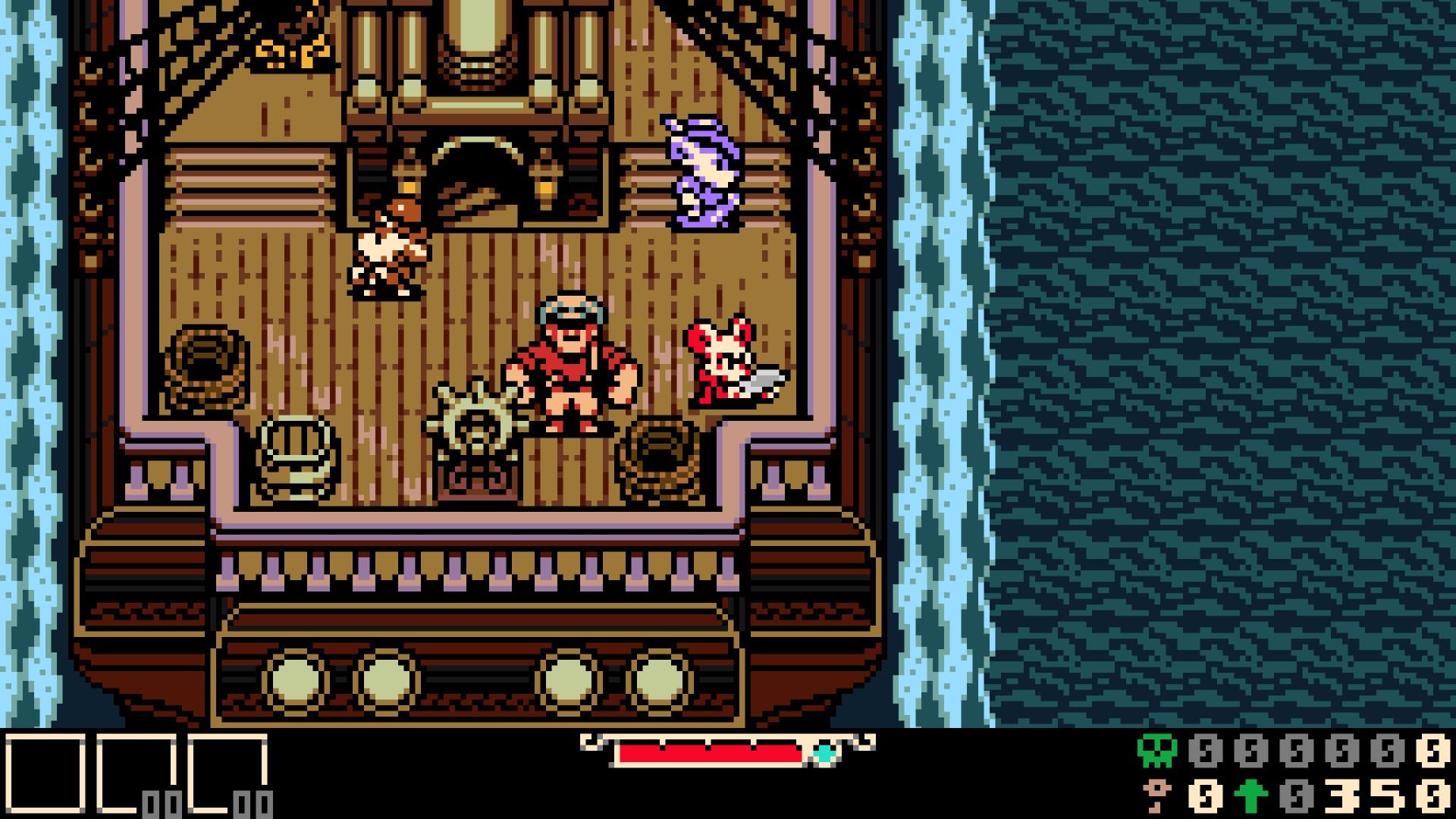 (The beginning of a new adventure.)
Well... what could go wrong is that it could turn out that Mina the Hollower isn't a Zelda-like. At least, I certainly wouldn't describe it as such (and I'm not alone in that). It's weird, right? The first thing most people are going to think when they see a game that looks like this is that it's like Zelda, however, the game just doesn't behave the way one might expect a classic Zelda title to behave. That's not to say I think every top down adventure game should be exactly the same, but this game directly calls to the Game Boy Color Zelda games in it's artstyle, yet when it comes to the gameplay itself, it consistently throws the conventions of a Zelda style game out the window. So if you're coming into it with those expectations, which a lot of people are, you're going to be experiencing some culture shock to say the least.
So if it's not a Zelda, then what kind of a game is it? Well, let me try to break it down for you: Mina the Hollower is a 2D top down game. The main gimmick in the game is burrowing, if you hold down the jump button, after landing, Mina will burrow into the ground (hence her title as a "Hollower"), and popping out from a dig allows her to leap farther, allowing you to navigate through platforming and environmental challenges to progress. The game also features a heavy emphasis on combat with robust enemy design, and you as a player can pick and choose from between 5 different weapons with distinct movesets.
One of the more contentious things about this game is that it features major mechanics inspired by Dark Souls, such as a healing system similar to the Estus Flask system which you also have to charge by damaging enemies, and the fact that you drop a Spark upon death which you have to recollect, or else lose all the currency you're holding if you die again. It also has a leveling system like an RPG, as you collect more currency, you'll "Bone Up" (as the games currency is Bones), and be able to select one of 3 stats to upgrade (or choose to convert your currency into Bonedust which you cannot lose upon a death). The game is an open world, you can go pretty much anywhere from the outset, and are not locked by major upgrades or gated behind story progression. However, every major section of the world is more or less a linear action stage, with one path from beginning to end, and they're all intended to be cleared in a pretty specific order.
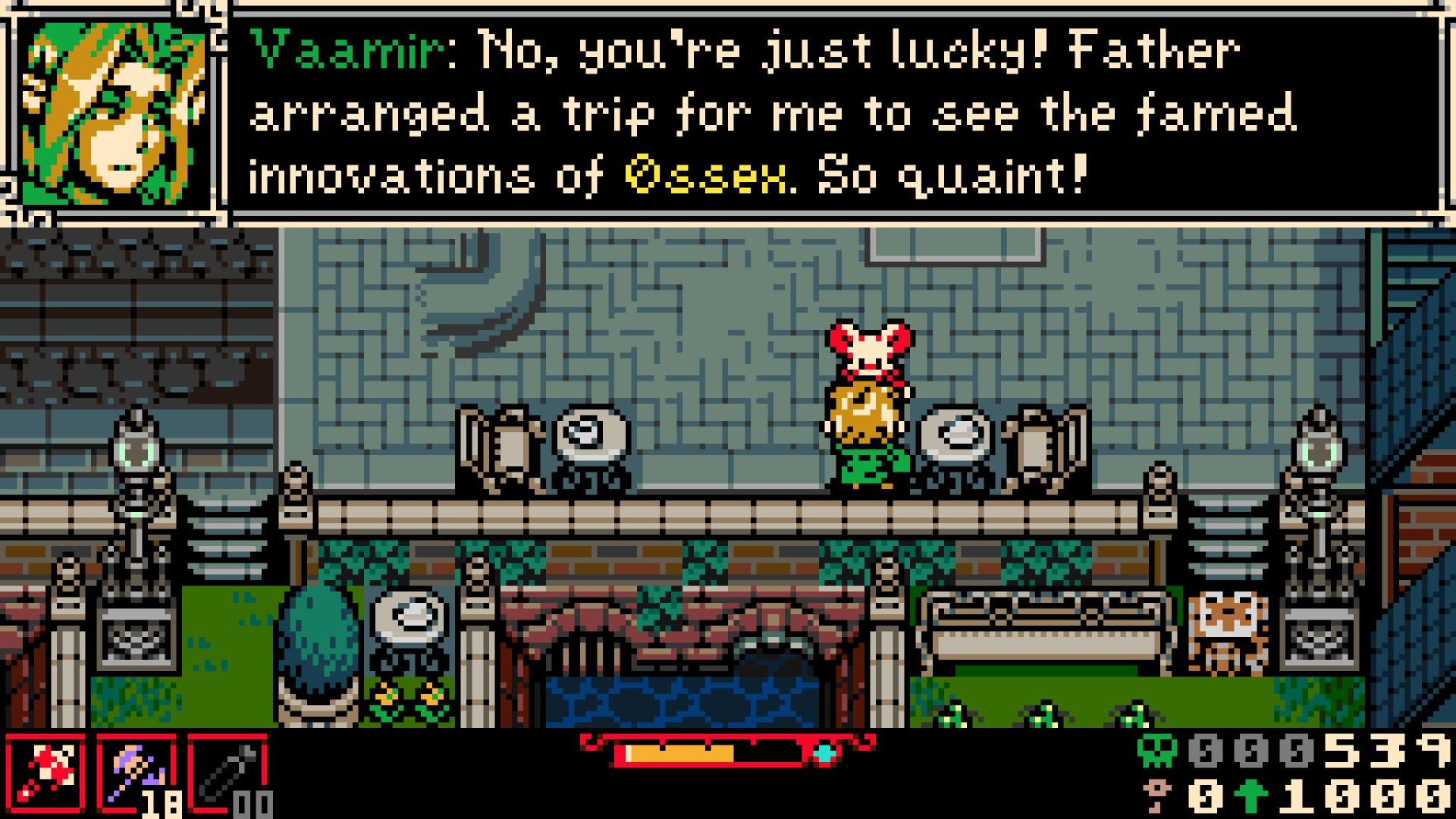 (This guy sure looks a lot like Link, huh? I think that's the joke here.)
So, there's your answer, it's simple really; Mina the Hollower is just a 2D Top Down Open World Linear Action Adventure Platformer RPG Soulslike. No, really, if I try to sit down and think about it, I'm not sure I could tell you what kind of game Mina the Hollower is supposed to be. I mean, it initially seems like a Zelda, but it throws out the puzzle and item based progression and supplements it with a heavier focus on action and linear challenges, while also featuring a smattering of game mechanics and design philosophies lifted from other games which conflict with each other constantly. For example, when you're struggling on a platforming challenge, you'll find your health drained from falling in pits, but the main way you heal yourself is by dealing damage to enemies, so before you get any of the upgrades that make your healing better, you either have to try to continue platforming and die, or leave and try to fight an enemy to regain your health and die. The game also features a sidearm system lifted whole-cloth from Castlevania, the sidearms you pick up are almost exclusively used for combat, but also sometimes some of them needed for traversal in specific areas, bringing it almost back to being like Zelda items in a weird roundabout way that doesn't feel like it fully justifies why it works the way it works.
Mina wants to be an open world game, you can go anywhere your heart desires, but the world's major areas funnel down into linear action stages that are meant to be tackled in a predetermined order, and if you happen to not get the memo and go to the wrong place at the wrong time, you'll get your hand burnt touching the metaphorical stove. But that's no problem, right? If you're having too much trouble in one area, why don't you leave and go somewhere else! Oops! The game has Soulslike mechanics, you can't leave this area yet, because that enemy that killed you is now carrying your Spark, which need to go back and collect so you don't lose your bones! Alright, you got your spark back! Well, at this point, you're so far into the stage already, do you really want to backtrack allll the way out again? Why not just grind a little bit more for that next level up and keep going, you're so close to the boss!
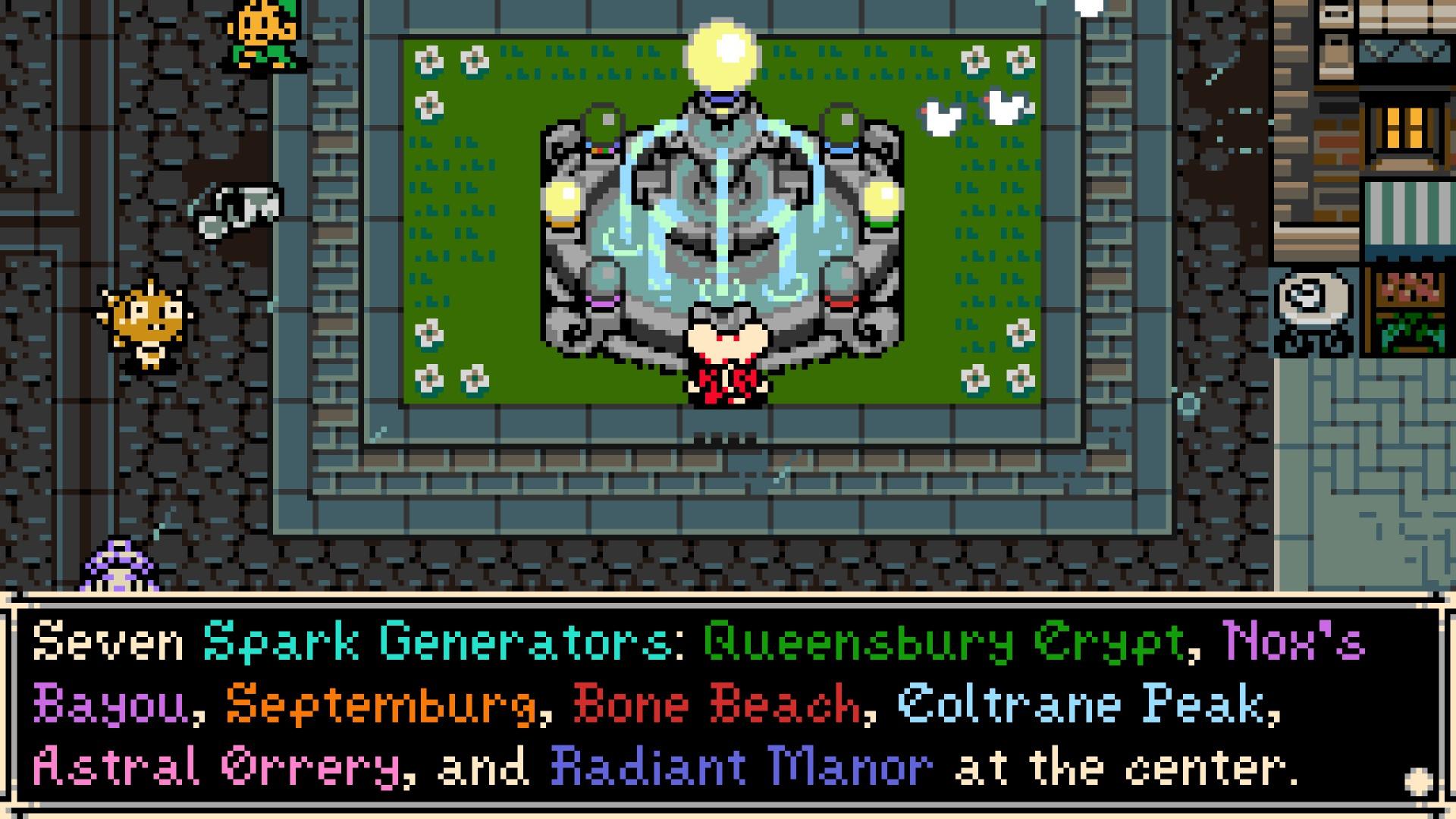 (Mina the Hollower has several things in the game that try to help you understand the intended order for tackling it's areas, but they all feel like gentle nudges at best.)
I want to appreciate that the game allows you to ignore the intended sequence and go wherever you like, but balancing an open world like that is extremely difficult, and there's a reason why gating things off behind a linear progression path was the norm in game design for so long. It's definitely a boon for repeat playthroughs, being able to tackle the game's challenges in any order is a welcome design for veteran players, but I don't believe the game's signposting is good enough for newcomers, especially those coming in with a Zelda mindset. A lot of the trouble I had early on in this game was because I forgot that the game told me I was supposed to head to Nox's Bayou after beating Queensbury Crypt, and instead stumbled upon Septemburg where I got my ass beat and died over 60 times (the game helpfully keeps track of how many times you die in each area and prints this in the newspaper). Of course, in retrospect, yeah I clearly wasn't strong enough to be there yet, but at that point I was still approaching this game as if it was a classic Zelda-like with major areas gated behind progression, thinking that if I'm allowed to be somewhere that means I'm supposed to be somewhere. Was I really so wrong for misinterpreting it when the game tries so hard to look like Zelda to begin with?
It's not like this game never knows what it's doing or that it never has smart design, a lot of these problems are alleviated by trinkets you can find and equip, upgrades you can buy, shortcuts in the world, and/or paying especially close attention to NPC dialogue. I also think the core concept of burrowing is great, and the game makes a lot of clever uses of the mechanic, but there's ultimately something that's not quite right here. It feels like Mina the Hollower has an identity crisis, and these cracks show up especially if stray from the game's intended path, miss a powerful upgrade, fail to understand a core mechanic, or simply don't realize that something an NPC is saying is actually really important as opposed to the five other NPCs you just talked to who told you jokes. The pitch in it's Kickstarter campaign lists that it's inspired by Castlevania, Link's Awakening, and Bloodborne, and it's clear that love for these titles (and handheld gaming in general) formed the foundation of Mina the Hollower, but does Mina the Hollower ever really nail down what Mina the Hollower is on it's own? When you're lifting mechanics straight from other games and putting them together in ways where they conflict with each other, the way you resolve that isn't to add optional upgrades or cheats to make those mechanics less detrimental, it's to redesign the mechanic so that it becomes essential to the core design of your game, or else re-evaluate whether you ever even needed that at all.
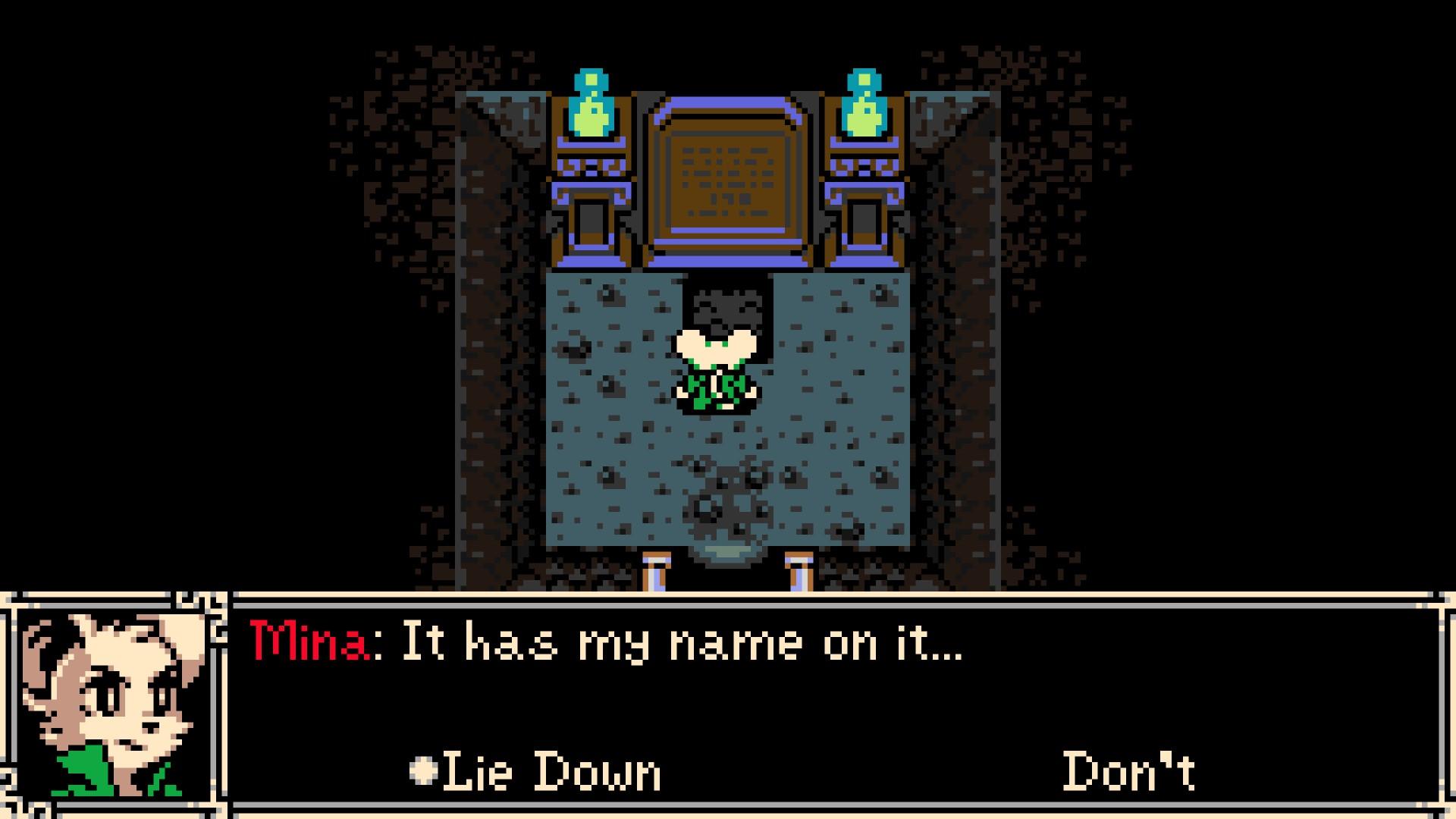 (No comment.)
I think it's important to understand the fact that this game had it's fair share of troubles during it's development. The Kickstarter campaign launched in Febuary of 2022 and listed the estimated delivery of the game as "December 2023", however, it wouldn't officially be slated for release until Halloween 2025 before getting a last minute delay into 2026. Yacht Club Games' other project, a 3D Shovel Knight game that they had been developing at the same time had to be put on hold so those developers could support Mina the Hollower. While we don't really know exactly what went wrong that the game's development took so much longer than expected, I have a feeling that the game was initially meant to be larger in scope and less linear than what the final project ended up being. I know I'm being pretty harsh in my assessment of this game, so I have to say that it's actually a major miracle that Mina ended up being as good as it is despite everything. Speaking as someone who's dabbled in it myself, game development is really difficult and I have no shortage of respect for the developers managing to pull this off while being on the brink of bankruptcy. Hopefully they can take what they learned making this game and apply it to their next project so that it's even better.
(Like my writing? Leave me a tip on Ko-Fi!)